
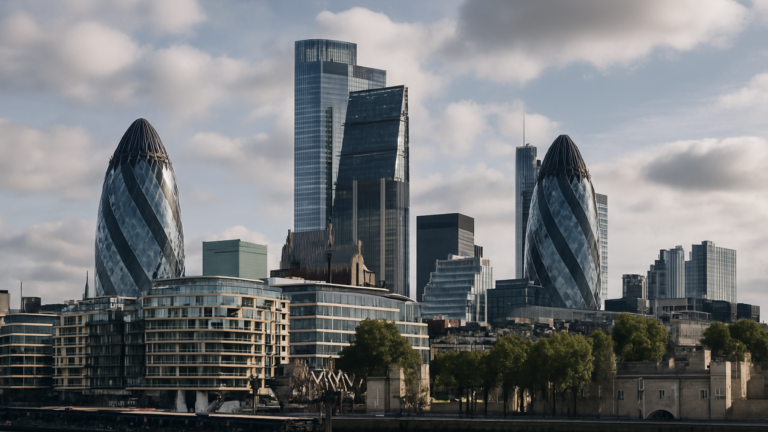
London is Europe’s business capital, a hub for financial services, eCommerce, healthcare, marketing, legal firms, and tech startups. These industries handle sensitive customer data daily — making them prime targets for cybercriminals. Despite being outside the EU post-Brexit, the UK has retained GDPR in the form of UK GDPR, and businesses in London are still subject to strict data protection laws and massive fines for non-compliance.
Cyber threats are rising year after year, and small to mid-sized businesses are often the weakest link. Without proper cybersecurity software, a single click on a phishing link or one outdated system could result in catastrophic consequences: stolen customer data, frozen systems, lost revenue, and legal repercussions.
GDPR Fines in the UK: A Legal and Financial Minefield
The UK GDPR, in force since January 2021, mirrors the EU GDPR in most of its provisions. It requires every business that processes personal data to secure it with appropriate technical and organizational measures. If a company fails to do so, it risks enforcement actions from the Information Commissioner’s Office (ICO), which can include warnings, audits, suspension of operations, and heavy fines.
The UK GDPR allows for two tiers of fines:
- Up to £8.7 million or 2% of global annual turnover
- Up to £17.5 million or 4% of global annual turnover
These fines are not hypothetical. London-based businesses have been on the receiving end of some of the most high-profile GDPR enforcement actions in Europe.
In 2020, British Airways was fined £20 million for failing to protect personal and payment card information of over 400,000 customers. Hackers exploited a vulnerability in the company’s website code and redirected users to a fraudulent site. The ICO found that BA had poor security practices, no adequate data protection measures, and failed to detect the attack for over two months.
Similarly, Marriott International, which has operations in London, was fined £18.4 million after a data breach exposed personal details of 339 million guests. The breach had gone undetected for years and was only discovered after the company acquired Starwood, whose systems had already been compromised.
Other UK-based firms have also been hit:
- Ticketmaster UK: £1.25 million fine in 2020 for failing to secure customer payment data through its online payment page
- Clearview AI (although not UK-based, fined for processing UK data unlawfully): £7.5 million in 2022
- Equifax Ltd: £500,000 (the maximum pre-GDPR fine) for a 2017 breach that affected UK citizens
These fines are a clear message: businesses must invest in cybersecurity or be prepared to pay the price. Software that ensures endpoint protection, threat monitoring, secure backups, and GDPR-compliant data handling is no longer optional.
Ransomware Attacks in the UK: A Growing Crisis
Beyond fines, ransomware is the most financially damaging and disruptive form of cyberattack facing UK businesses today. In a ransomware attack, hackers lock down a company’s systems and demand payment (usually in cryptocurrency) to restore access.
In 2022, the UK’s National Cyber Security Centre (NCSC) declared ransomware as the number one cyber threat to British businesses. These attacks are increasingly sophisticated, often targeting the most vulnerable industries with outdated systems and no robust cyber defenses.
One of the most shocking examples was the attack on the Hackney Borough Council in 2020. The ransomware crippled IT systems, preventing residents from accessing housing services, benefits, and council records. It took over a year to recover fully and cost the council millions.
In the healthcare sector, the WannaCry attack in 2017 devastated the NHS across England. Although not a London-specific attack, it impacted numerous London hospitals and clinics, locking staff out of critical systems. Operations were cancelled, patient data was inaccessible, and the public health system was paralyzed. The root cause? Unpatched and outdated software.
Another example is Travelex, a London-based currency exchange giant. In 2020, Travelex suffered a massive ransomware attack by the Sodinokibi (REvil) group. The company’s websites, ATMs, and customer-facing operations went dark for weeks. Attackers demanded a £4.6 million ransom. Eventually, the attack caused the company’s collapse, resulting in the loss of over 1,300 jobs.
Smaller businesses are even more vulnerable. In many cases, SMEs in London have had their data completely wiped, faced reputational damage, or paid ransoms that left them in financial ruin — all because they didn’t have a secure infrastructure in place.
Cybersecurity software specifically designed for business can prevent these outcomes through:
Ransomware detection and real-time blocking
Secure cloud backups to restore encrypted files
Multi-layer firewall protection and email filtering
Employee access controls and suspicious behavior monitoring
Automated patching and vulnerability scanning
Every hour of downtime costs money. Every data breach risks trust. Every ransomware demand threatens your future.
Why Cybersecurity Software is a Business Essential in London
In a city as connected and competitive as London, cybersecurity is no longer just about protecting your IT systems. It’s about protecting your customers, your revenue, your employees, and your brand.






Add comment