
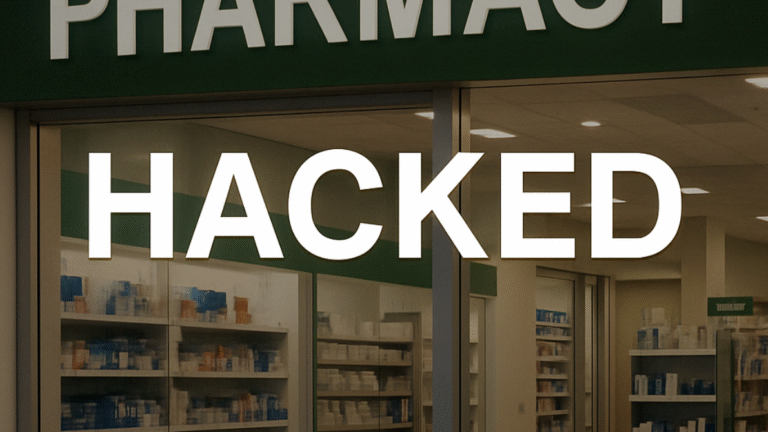
Pharmacists and pharmaceutical businesses have become prime targets for cybercriminals, particularly through email phishing attacks. These attacks are deceptively simple but can lead to devastating consequences, from stolen patient records to complete business shutdowns. As the pharmaceutical industry handles vast amounts of sensitive data—such as patient prescriptions, supplier contracts, insurance information, and even controlled substance orders—it’s a goldmine for hackers.
How Phishing Attacks Work in Pharma
Hackers often pose as trusted entities—such as medical suppliers, insurance companies, or even health regulators. They send legitimate-looking emails containing malicious links or attachments. A single click can install malware, give hackers access to email systems, or trick staff into entering login credentials on fake portals. Once inside the network, hackers can:
Access confidential patient data (violating HIPAA or GDPR laws)
Steal or alter prescriptions and orders
Demand ransom via ransomware after encrypting essential files
Harvest pharmaceutical pricing and research data
Manipulate pharmacy supply chain systems
Detailed Examples of what Phishing emails Would Look Like
Fake Supplier Invoice Email
Subject Line: “Urgent: Invoice #PHRM-43892 Due Today – [Supplier Name]”
Body:
Dear [Pharmacist Name],
Please find attached your pending invoice for the insulin order placed last week. Kindly make payment today to avoid disruption in delivery.
—
The email contains an attachment titled invoice.pdf.exe or a link to a fake payment portal. Once clicked, malware is installed, allowing hackers to access the pharmacy’s internal systems, financial records, and emails. In some cases, it leads to ransomware deployment, locking the system until a ransom is paid.
Fake Government Health Agency Warning
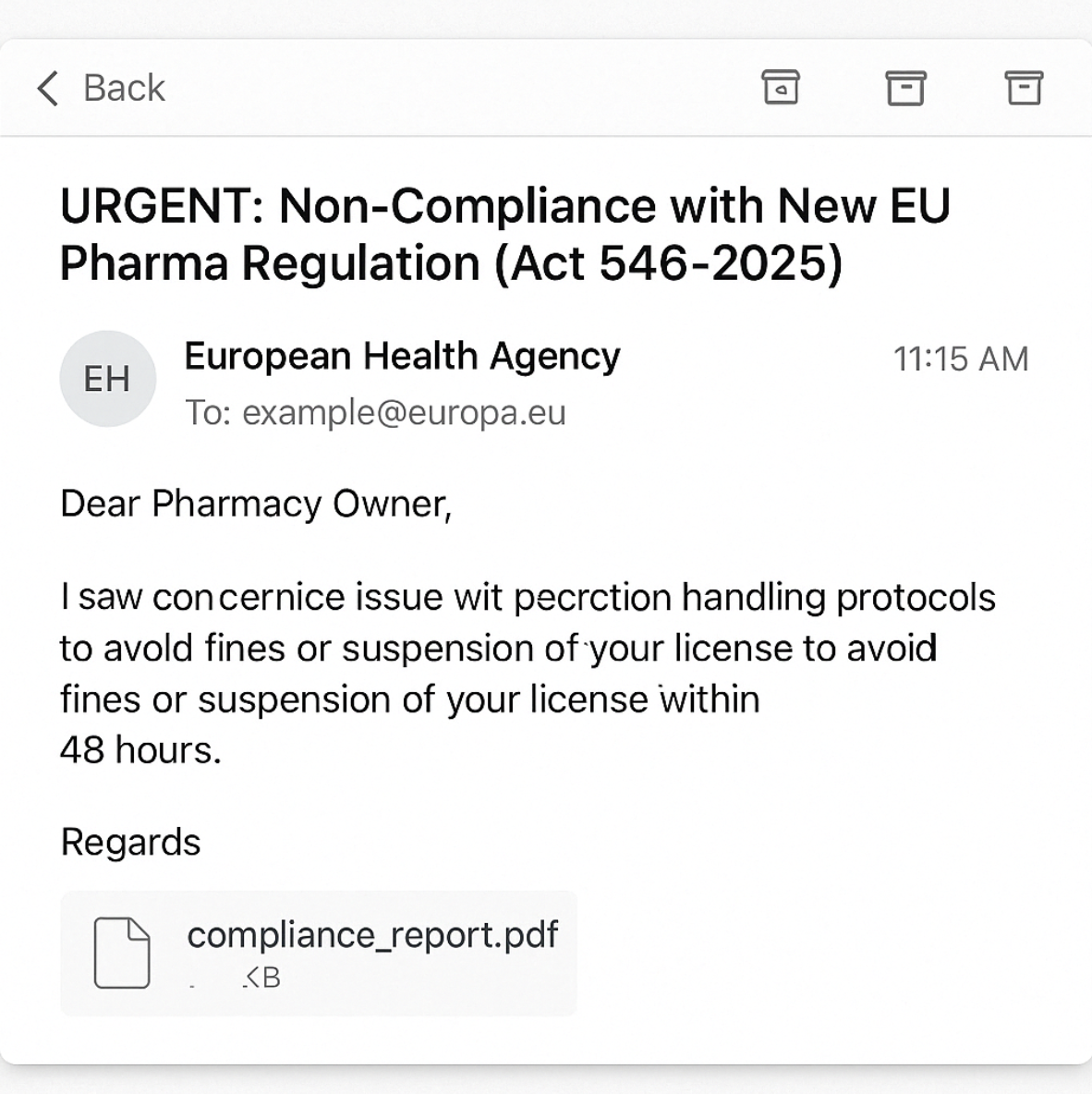
Subject Line: “URGENT: Non-Compliance with New EU Pharma Regulation (Act 546-2025)”
Body:
Dear Pharmacy Owner,
We have detected a compliance issue with your latest prescription handling protocols. To avoid fines or suspension of your license, please download and complete the attached compliance report within 48 hours.
—
The file leads to a credential-stealing Trojan. Once inside, the hacker can access patient prescription logs, which leads to data breaches and GDPR penalties.
Spoofed Email from Internal Employee
Subject Line: “Can you double-check this order quickly?”
Body:
Hi,
Can you confirm the total price and availability of 20 boxes of Xarelto? A clinic just emailed me, and they need it today. Here’s the order form they sent.
Thanks,
—Paul (from inventory)
—
This appears to come from a real staff member (whose email was spoofed or hacked). The “order form” is a malicious Excel file with macros. Opening it gives full access to the system. Hackers then send emails from the pharmacy’s domain to suppliers, insurance companies, or patients, launching a supply chain attack.
Fake Job Application Email
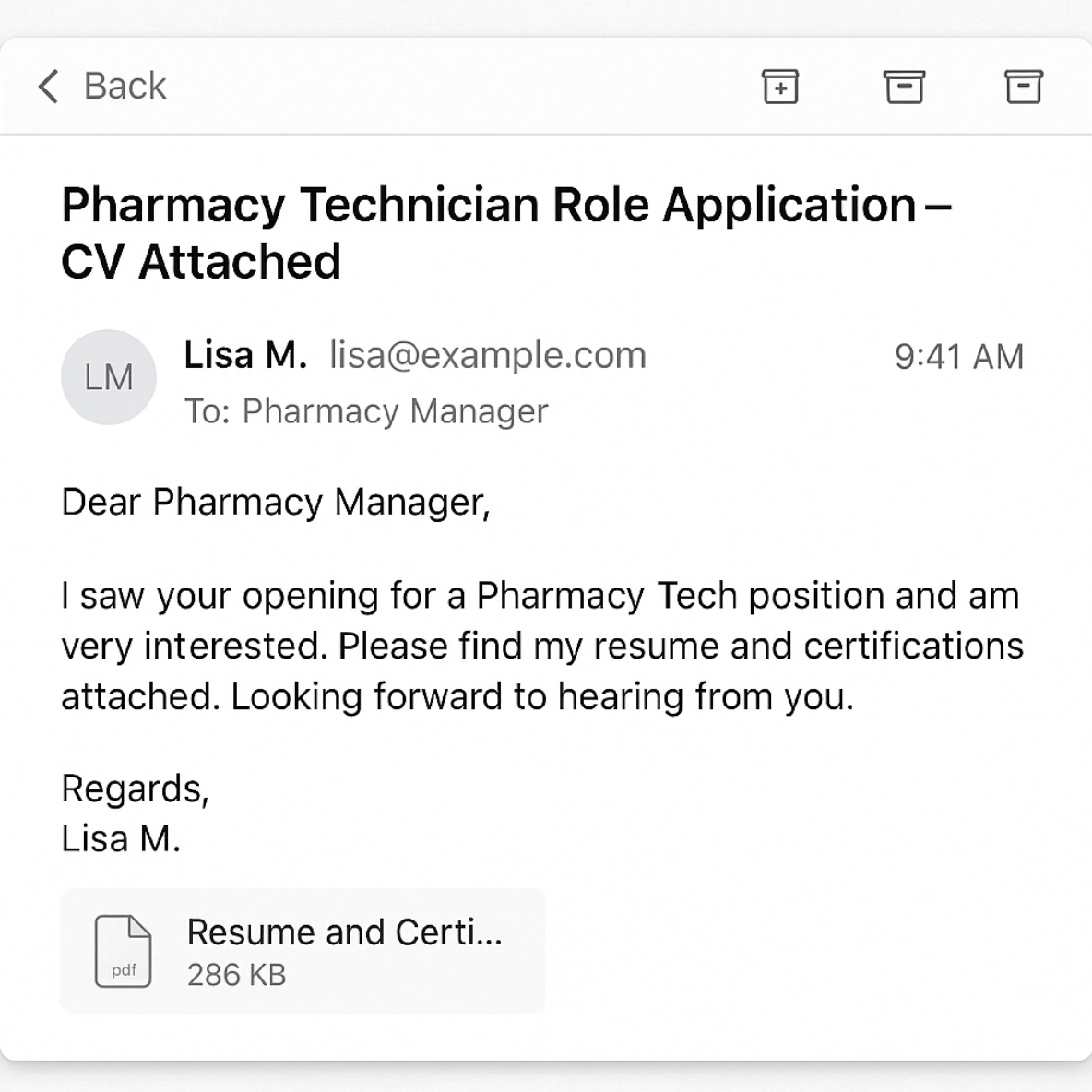
Subject Line: “Pharmacy Technician Role Application – CV Attached”
Body:
Dear [Pharmacy Manager],
I saw your opening for a Pharmacy Tech position and am very interested. Please find my resume and certifications attached. Looking forward to hearing from you.
Regards,
—Lisa M.
—
The attached file may be a .doc or .pdf with embedded code. When opened, it installs malware. This is often how Remote Access Trojans (RATs) are deployed, allowing full control over the pharmacy’s computers, camera, keystrokes, and files.
Fake Insurance Company Inquiry
Subject Line: “Verification Request for Patient Coverage – Action Required”
Body:
Hello,
We’re requesting verification for the attached claim submitted by patient James Roberts (DOB: 10/11/1982). Please review and confirm treatment dates.
Kindly respond within 24 hours.
—
Attachment contains fake patient data forms but is actually spyware. Once opened, it collects all open window data and active session cookies, letting the attacker hijack live sessions inside the pharmacy’s insurance portals.
Phishing attacks on pharmacies aren’t just spam—they’re precision-targeted traps exploiting trust, urgency, and professional workflows. One click can lead to theft, ransomware, blackmail, and massive regulatory fines. Pharmacy owners and staff should never trust email attachments or links blindly, always verify with the sender, and use dedicated cybersecurity software and employee training to build a human firewall against such attacks.
The Damage to Pharma Businesses
The consequences are severe. Data leaks can lead to legal penalties and regulatory fines, especially under GDPR or HIPAA laws. A data breach can also erode patient trust, cause financial losses, and trigger class action lawsuits. Operations may be halted for days or weeks, resulting in lost revenue and reputational damage.
In extreme cases, hackers can divert prescription drugs, falsify orders, or reroute sensitive shipments—posing not only a business risk but also a public health threat.
Pharmaceutical businesses must adopt robust cybersecurity practices, including employee training, email filtering, multi-factor authentication, and specialized cybersecurity software tailored to healthcare standards. In today’s digital environment, even a small pharmacy is never too small to be targeted.





Add comment