
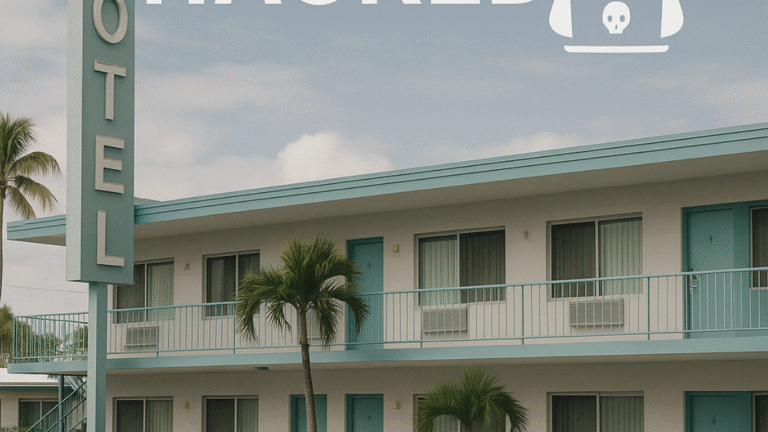
USA – A coordinated cyberattack has left 11 independent motels across the United States crippled, following a wave of phishing emails that resulted in full-scale data breaches and ransomware lockdowns. The incident, dubbed “Operation Check-In,” is being investigated as part of a growing trend of cyberattacks targeting small hospitality businesses.
The Entry Point: Fake Booking Requests
Cybersecurity analysts have traced the attack to a phishing email campaign disguised as booking confirmations from popular platforms like Booking.com and Expedia. Motel managers and front desk staff received emails with subjects like:
- “Booking Confirmation – May 2025”
- “Customer Itinerary Attached (Urgent)”
- “Reservation Payment Error – Immediate Attention Needed”
Attached to these emails were Word and Excel files that, when opened, deployed macro-based malware into the system. The malware then silently spread through the motel’s local network, exploiting outdated security protocols and unpatched Windows servers.
Data Compromised
The breach impacted everything from guest records to financial operations. Affected motels reported:
- Full guest reservation databases stolen
- Credit card processing systems compromised
- Wi-Fi routers hijacked to spread malware
- Employee payroll and tax info exfiltrated
In one case, a small family-owned motel in Alberta reported that loyalty program details and scanned guest IDs were leaked onto the dark web within 72 hours of the attack.
The Ransomware Payload
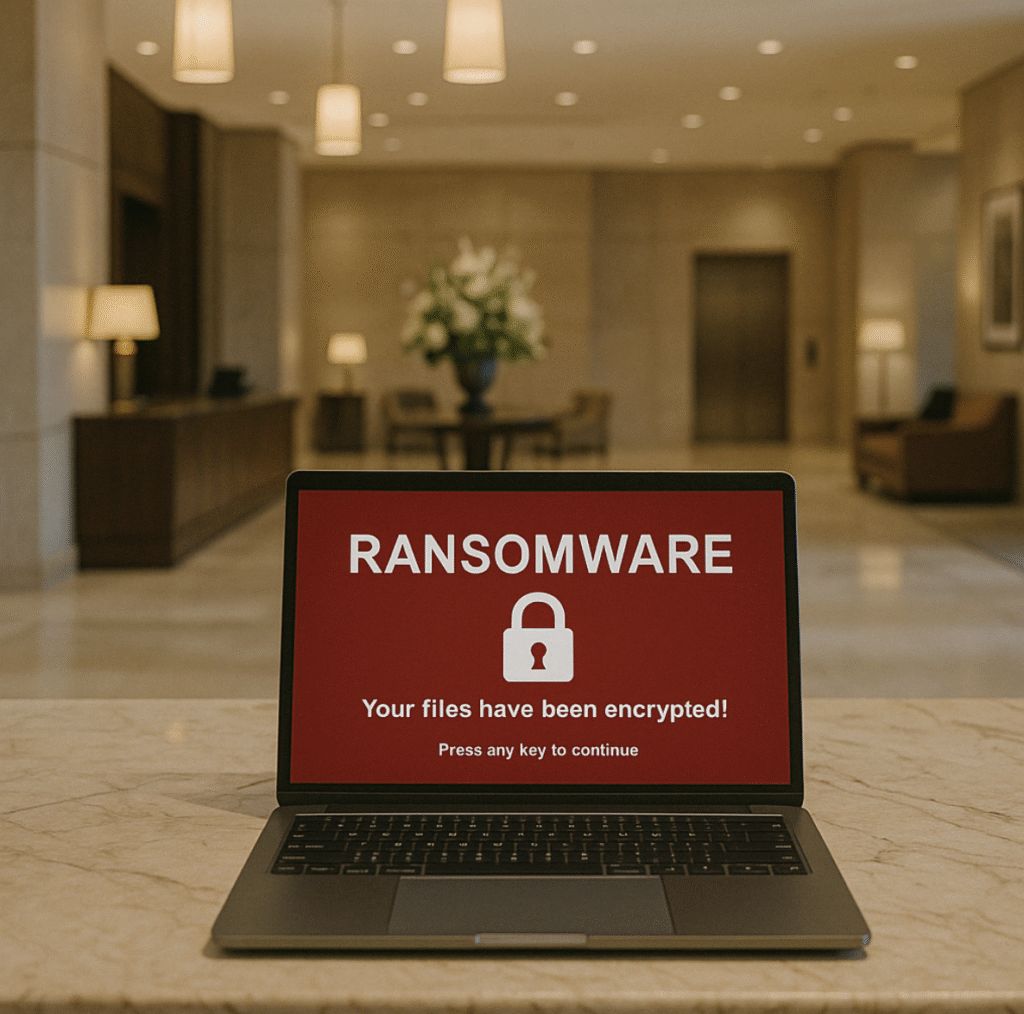
Within 48 hours of infection, all 11 motels received ransom demands in the form of desktop lock messages and printed instructions from hijacked receipt printers. Hackers demanded ransom payments of $20,000–$100,000 in Bitcoin, warning that failure to comply would lead to:
Destruction of backups
Public release of guest data
Permanent shutdown of digital booking systems
Several motels attempted to restore their systems manually but later discovered that their backup files had already been encrypted.
Financial & Reputational Fallout for Motels
Motels in Oregon, Ontario, Texas, and Miami were forced to cancel bookings for the week, incurring thousands of dollars in losses. One property reported receiving over 150 chargeback claims from panicked customers who saw unauthorized charges post-visit.
Worse still, some motels are now under legal scrutiny for failure to comply with local data privacy regulations, including GDPR-equivalent laws in Canada and state-level data protection laws in the U.S.
Expert Insight
“This wasn’t some amateur attack — this was a planned, multi-layered operation,” said Ginario Pinoris, cybersecurity expert of CyberInfo Center, a government agency offering protection software to small hospitality businesses. “Motels are often the weakest link in the hospitality chain. They’re overlooked, underfunded, and in many cases, unprotected.”
This firm reported that none of their motel clients were impacted, citing anti-phishing filters, automated backup systems, and endpoint monitoring as key defenses.
Warning to the Motel Industry, why are Motels an Easier target for Hackers
Motels typically operate with tight margins, especially independent or family-owned ones. Unlike large hotel chains with dedicated IT departments, most motels rely on outdated antivirus software (if any), making them easy to breach.
Outdated Systems and Legacy Hardware
Many motels still use:
Old POS terminals
Windows 7 or unpatched Windows 10 PCs
Basic routers with factory passwords
This creates a perfect environment for ransomware, trojans, and phishing exploits.
Untrained Staff = Easy Phishing Victims
Motels often have a high turnover rate among staff. Front desk clerks or part-time workers may not be trained to recognize malicious attachments, fake invoices, or phishing emails pretending to be from booking platforms like Expedia or Booking.com.
No IT Department
Most motels don’t have a dedicated IT professional — they rely on a friend, a family member, or “some guy who installed the printer.” That means no regular backups, no system monitoring, and no threat detection software.
Sensitive Data Still Collected
Despite being small, motels still handle:
Credit card payments
Guest IDs (scanned at check-in)
Wi-Fi login credentials This data is valuable on the dark web, and hackers know it’s often less protected than in big hotels.
Big Hotels = Bigger Firewalls
Large hotel chains are harder targets because they:
Have enterprise-level firewalls
Conduct regular staff training
Employ cybersecurity teams
Use secure cloud systems for backups
Hackers are like burglars — they look for unlocked doors, not security vaults.
Motels Are More Likely to Pay Ransom
Because they can’t afford long downtime, a motel is more likely to pay a $10,000–$50,000 ransom just to get back online. Hackers know this and exploit their desperation.
Cybersecurity firms are now warning the entire hospitality sector to step up their protection protocols. Recommendations include:
Disabling macros on office software by default
Using advanced threat detection systems
Training staff on phishing recognition
Implementing offline data backups
The U.S. Hospitality Cyber Unit issued an urgent advisory to over 3,000 registered motels and inns warning that similar attacks may already be underway.





Add comment